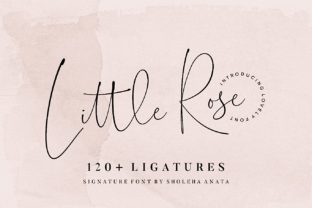
Little Rose: A Signature Font for Stunning Web Designs
As a web designer, I'm always on the lookout for fonts that can elevate my projects and make them stand out. Recently, I had the opportunity to test Little Rose, a contemporary and beautiful signature font, in a real website layout. The results were nothing short of impressive, and I'm excited to share my experience with you.
The Visual Charm of Little Rose
Little Rose is a premium font that exudes elegance and modernity. Its graceful, flowing lines and delicate curves give it a unique personality that's both charming and sophisticated. The font has a hand-drawn feel, making it perfect for adding a personal touch to digital designs. Whether you're working on a creative portfolio, a boutique online store, or a coaching website, Little Rose brings a touch of refinement and character to your project.
Testing Little Rose in Real Web Layouts
I decided to test Little Rose in a variety of web design elements to see how it performed. First, I used it in the hero section of a creative portfolio site. The font's elegant style immediately caught the eye, creating a strong visual impact. The large, bold headings in Little Rose made the content stand out, drawing visitors into the site.
Next, I experimented with Little Rose in a product landing page. The font worked beautifully in the call-to-action areas, where its decorative accents added a touch of luxury. The text was easy to read, even on smaller screens, thanks to its clean and well-defined characters. This made it ideal for mobile-first designs, where readability is crucial.
Readability and Responsive Design
One of the key aspects of any font in web design is its readability, especially in responsive layouts. Little Rose performed exceptionally well in this regard. On desktop screens, the font's intricate details were clear and legible, while on mobile devices, it maintained its charm without sacrificing readability. I found that using Little Rose for short phrases, such as section headings and buttons, was particularly effective. It added a touch of elegance without overwhelming the user.
For longer text, I recommend pairing Little Rose with a clean sans serif font. This combination ensures that the body copy remains highly readable, while the decorative headings in Little Rose add a touch of flair. For example, in a blog redesign, I used Little Rose for the post titles and a simple sans serif for the article content. The result was a harmonious and visually appealing design that was easy to read and navigate.
Web Design Applications and Best Practices
Little Rose is incredibly versatile and can be used in a wide range of web design applications. Here are some practical examples:
- Website Headers: Use Little Rose for the main title or tagline to create a memorable first impression.
- Hero Sections: Incorporate Little Rose in the headline to draw attention and set the tone for the rest of the page.
- Landing Pages: Add Little Rose to call-to-action areas to make them more inviting and engaging.
- Online Shop Banners: Utilize Little Rose for promotional messages and special offers to add a touch of elegance.
- Blog Graphics: Use Little Rose for featured image captions and category labels to enhance the visual appeal.
While Little Rose is a fantastic choice for many web design elements, it may not be suitable for long body copy, small navigation text, or dense dashboard layouts. In these cases, a more straightforward and legible font would be preferable. Additionally, when using Little Rose over image backgrounds, ensure there is enough contrast to maintain readability. Darker or lighter versions of the font can be used to achieve this.
Font Pairing and Design Assets
To create a balanced and cohesive design, consider pairing Little Rose with a clean sans serif font. This combination works well for most web design projects, providing a good balance between decorative and functional typography. For a more editorial look, you might also try pairing Little Rose with a simple serif font. This can add a touch of sophistication and professionalism to your design.
Before using Little Rose in your web projects, make sure to check the included styles, alternates, ligatures, and weights. The font also supports multiple languages, which is a great feature for international websites. Additionally, verify the commercial font licensing to ensure you have the right to use the font in client projects, online stores, and other commercial applications.
In conclusion, Little Rose is a versatile and elegant font that can significantly enhance the visual appeal and user engagement of your web designs. Whether you're working on a creative portfolio, an online store, or a landing page, Little Rose adds a touch of sophistication and charm. With careful consideration of its readability and appropriate use, you can create stunning and effective web experiences that leave a lasting impression.